Transforming the UK's Armed Forces
The UK Government's Defence Investment Plan (DIP), published last week, is the most significant statement of defence intent in a generation. It commits to a fundamental transformation of the Armed Forces - not just more spending, but a military built for a different kind of threat.
Indra has been working in the UK for more than 20 years. We supply radar systems that protect British airspace today and we are a strategic provider of air defence radars to NATO's air defence network. We have spent decades developing technologies such as integrated air defence, command and control, and autonomous systems, which are identified in the DIP as central to the UK's future military capability. We are ready to help deliver it.
Integrated Air and Missile Defence
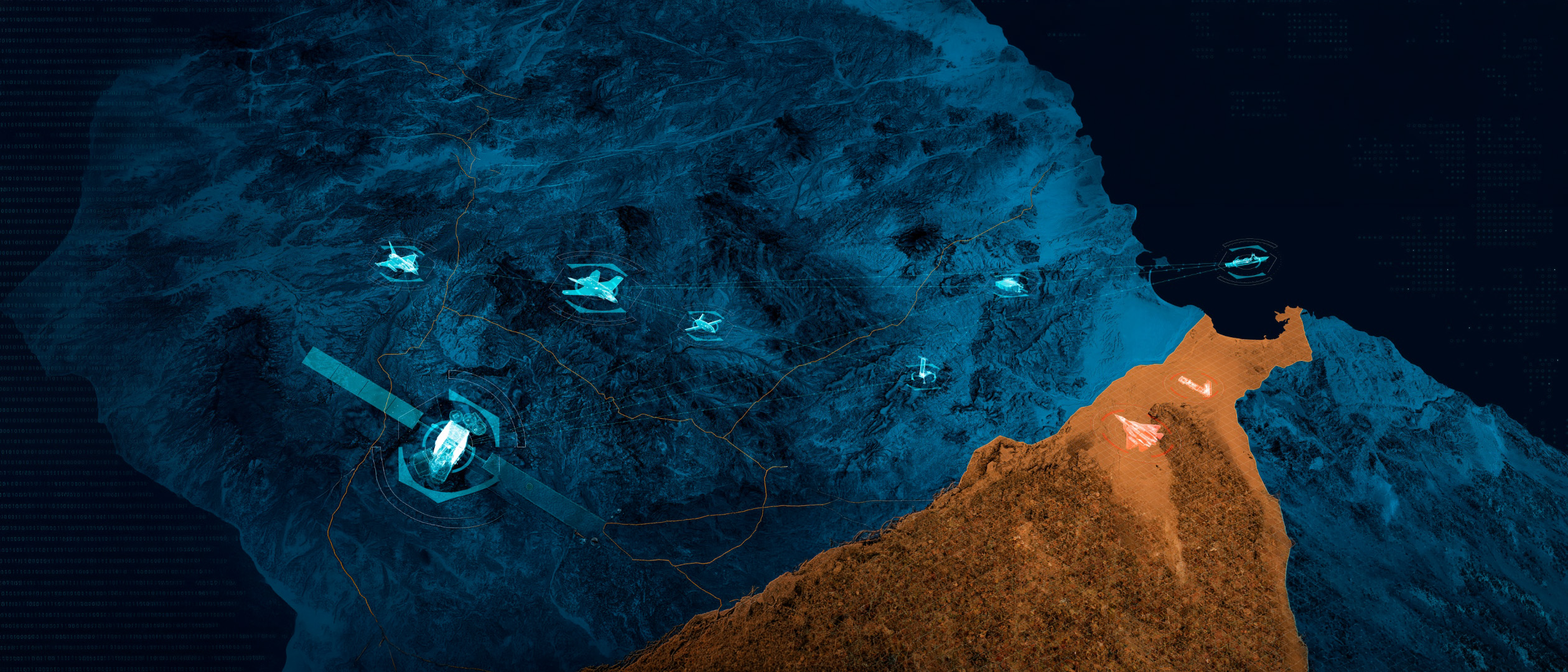
The threat to British airspace is more complex than it was even five years ago. Ballistic missiles, cruise missiles, and drones, in both large numbers and at short notice, are now a realistic prospect. The DIP's response is to invest in layered defences capable of handling threats across all of these categories.
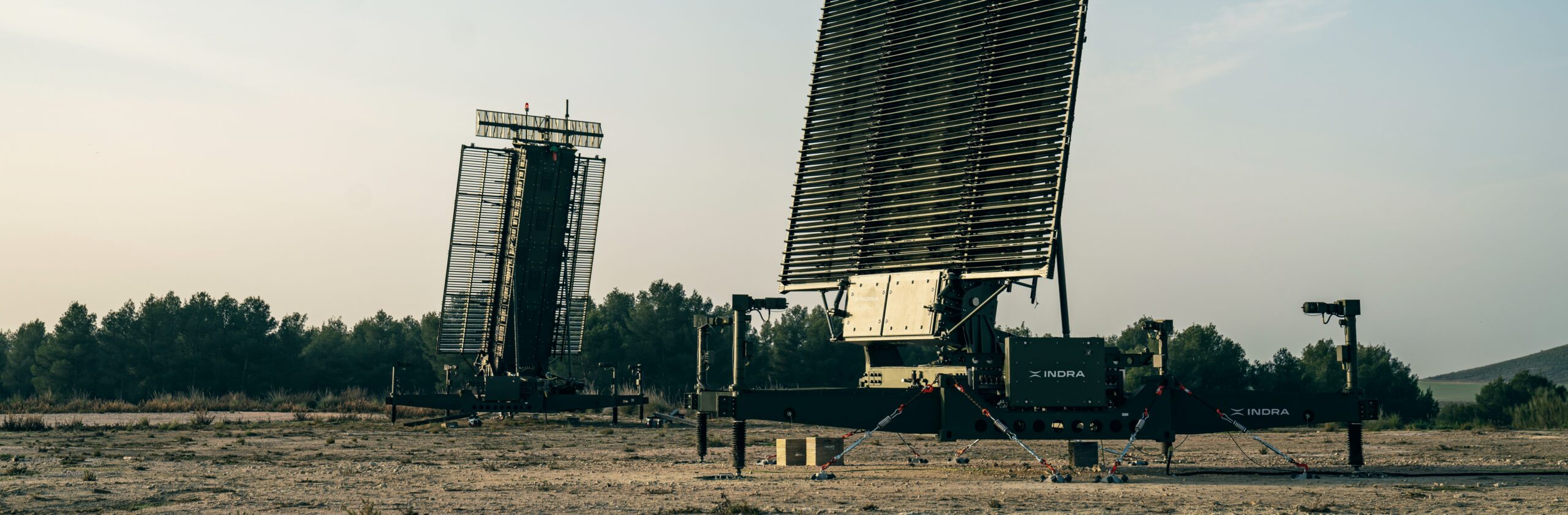
Indra has been designing and building air defence radar systems for more than 40 years, working with the Royal Air Force, NATO, ICAO, and ESA. Our LANZA 3D radar family is one of NATO's benchmark air defence systems in Europe. The LTR-25 transportable version is already in service with the RAF.
We cover the full range, from long-range early warning and ballistic missile detection, to short-range response against drones and low-flying threats. In April this year, we also joined Lockheed Martin UK, Leonardo, and MBDA in a study for NATO's future ground-based air defence requirements - work that will directly shape how the Alliance defends itself in the years ahead.
Counter-Drone Systems
The DIP's investment in drones and autonomous weapons is its single largest new commitment. The wars being fought in Ukraine have demonstrated that drones are no longer an emerging threat. They are being deployed at scale, are lethal, and the UK needs capable defences.
Our CROW counter-drone system has been operational in some of the most demanding environments in the world. It has protected NATO and EU summits, been deployed at COP16 in Colombia and APEC 2024 in Peru, and most recently secured the airspace above the Chilean presidential inauguration. It is currently in active service with the Spanish Air and Space Force. The system integrates radars, radio frequency sensors, cameras, and AI-based processing into a single platform that detects and neutralises drone threats, without requiring an operator to manage every step manually.
At the NATO Anti-Drone Interoperability Exercise in 2024, CROW demonstrated integration with 27 sensors and effectors from different manufacturers, confirming its compatibility with NATO standards. The UK does not defend itself alone, and any counter-drone capability needs to work seamlessly within the broader Alliance.
Electronic Warfare
The electromagnetic spectrum has become one of the most contested spaces in modern conflict. Adversaries use radio signals to communicate and coordinate attacks, and they work constantly to disrupt the other side's ability to do the same. We have seen this happen in Ukraine, where jamming the control of drones and intercepting communications has shaped the course of the fighting. The decision in the DIP to establish a new Defence Cyber and Electromagnetic Force is therefore welcome.
Indra has been building systems to do this for more than 50 years. We fit jamming systems, operate intelligence platforms that map how adversaries are communicating, and deploy ground-based equipment that can detect and counter threats including drone control signals. This equipment is also built to operate as part of a wider network, with each unit functioning independently but also feeding intelligence back to command centres.
Likewise, systems can be configured to fit a specific mission – they can be vehicle-mounted, deployed on foot, or in lightweight expendable form close to the front line.
Technology and Data Sovereignty
Ukraine has shown that speed of decision is now a clear military advantage. Identifying a target and directing a response, once measured in minutes, can now be compressed to seconds by AI, and Government is right to recognise that the technology making this possible is being developed by industry.
IndraMind is Indra's sovereign AI platform. It consolidates large volumes of data from multiple sources and converts that into actionable information that supports faster decisions, with less reliance on human input at every stage.
It already runs inside our electronic warfare systems, enabling real-time processing and translation of intercepted communications. Our partnership with Multiverse Computing is now focused on making the software leaner, reducing the computing power it needs so it can be deployed on equipment that works in the field.
Ready to Help
The Defence Investment Plan sets out what the UK needs. Delivering it requires partners with a track record, a UK presence, and a genuine commitment to the UK industrial base.
Indra has all three. We have been here for more than 20 years. We have delivered operational systems to the RAF and to NATO. We are already working with leading primes on the next generation of air defence. And we have built, over decades, a portfolio of capabilities in air defence, counter-drone systems, electronic warfare, and AI that maps directly onto what the DIP is asking for.
New contracts will be delivered and manufactured in the UK. We are part of the UK's defence infrastructure, and we are committed to deepening that partnership.
The Defence Investment Plan sets out what the UK needs. Delivering it requires partners with a track record, a UK presence, and a genuine commitment to the UK industrial base.
Connecting for transformation
“Looking for a tech solution with real impact? Let’s talk.
- Main headquarters | 17 Hanover Square, Mayfair, London, W1S 1BN